
3 min read
“I was tired of guessing.”
Mattia Saviolo on creating techno, a reference workflow that never worked, and why he started Sentinel DSP.
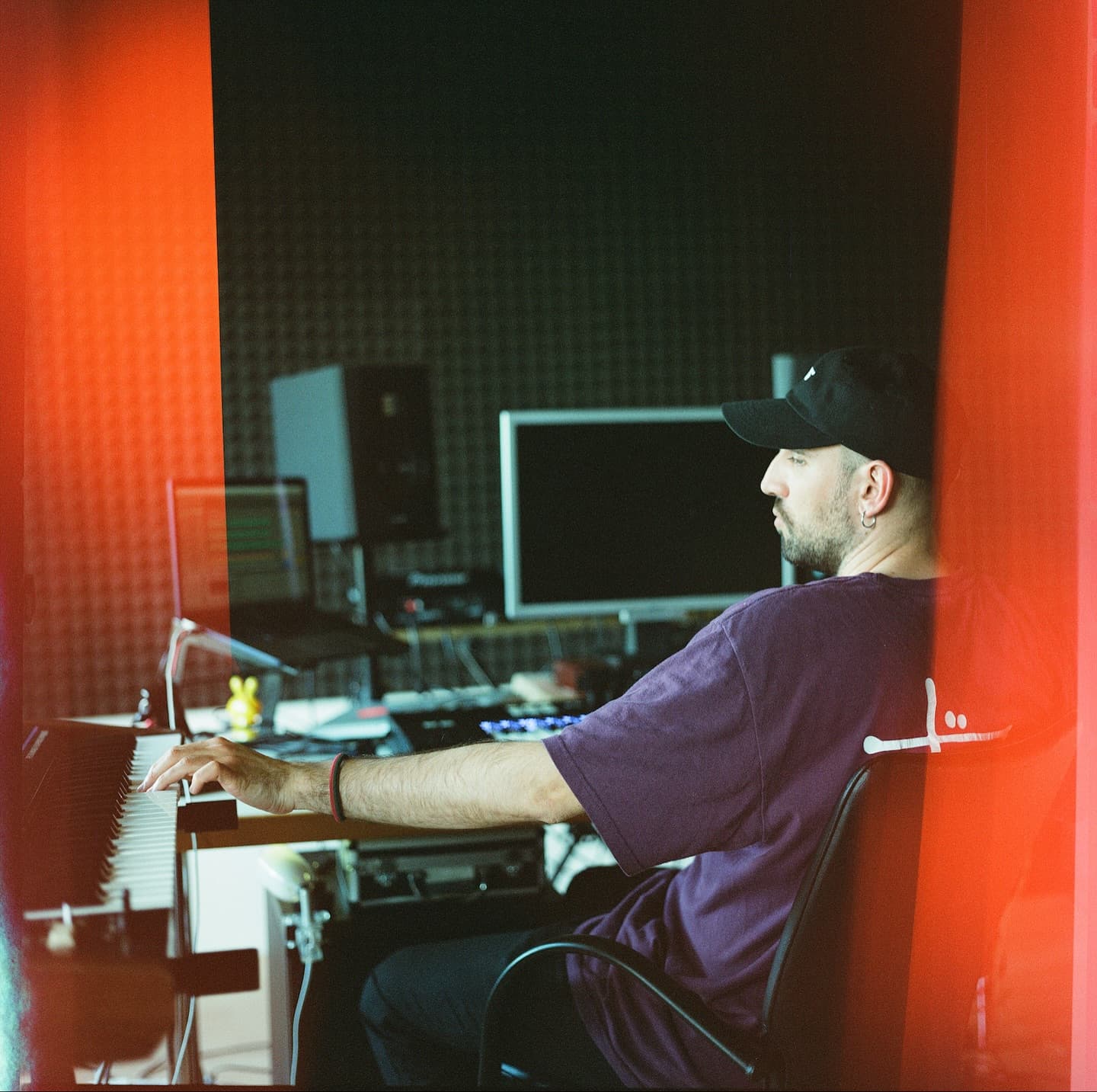
Sentinel DSP exists because of a workflow that kept failing in one Berlin studio.
Mattia Saviolo has spent over fifteen years making techno and mixing and mastering other people's records — for most of those years, the way he checked a mix against a reference was the way everyone does it: bounce, load, level-match by ear, flip back and forth, decide.
We asked him about the deciding — what a meter tells you and what it refuses to, and why someone with no particular interest in running a software company ended up starting one.
Start before any of this was a company. What does a week in your studio actually look like?
I'm in the studio almost every day, usually in the morning after a good coffee, working on client projects and my own music. Consistency matters most. Even when there's nothing urgent, I still go in, because I feel good being there.
And the reference workflow — what was wrong with it?
Reference tracks can get you close, even frequency-wise, but you often still miss a certain power in your own production. Sentinella started as something I needed myself: an intuitive tool that shows me the full picture and guides me to a finished track that sounds powerful and professional.
You're a producer, not a developer. How does that become software?
Roman and I have been friends for a long time. Over a lot of long studio conversations about what the tools we all use get wrong, a shared idea took shape: precise tools, engineered for the techno studio. I bring the ears and the years behind the desk. He turns it into the tools you find here at Sentinel DSP.
Why build only for techno? The obvious advice is to build for everyone.
I've tried thousands of plugins, and most are very generic. I mainly work with techno, so I wondered why no company specializes in it. I want in-depth, techno-specific tools, not one-size-fits-all placebo.
Sentinel DSP's first plugin was Sentinella. What does it do that an analyser doesn't?
It's intuitive, but not simplistic. In the background, it matches your track's tonal balance to a target curve built from years of my own research and analysis. It isn't just boosting or cutting EQ. It matches perceived energy across the spectrum.
Someone reading this has a mix that never quite sounds right. What do you tell them?
Deconstruct it, starting with the big picture. Look at the whole file first and find what's missing, for example by EQing the pre-master to understand its direction. Then go channel by channel and align each element. Big picture first, then the details.
What's next?
Roman and I are building a new plugin for the low end called LOENDER. I can't spoil much, but finally you'll be able to see the sub frequencies you can't hear.